Showing posts with label Bauhaus. Show all posts

Sunday, August 9, 2020

Bauhaus Watch Design

History

Bauhaus Signet adopted in 1921 (Do you see the profile?)

Bauhaus (full name, Staatliches Bauhaus)

Bauhaus was a German art school founded by Walter Gropius in Weimar and operated from 1919-1933, when the newly formed Nazi government shut it down. In 1925, Gropius moved the school to Dessau, its most famous location, where it remained open until 1932.
Bauhaus Dessau - photo by Spyrosdrakopoulos - own work, CC BY-SA 4.0
Gropius fled Germany to Britain in 1934, eventually emigrating to the US in 1937. There he created the International style of architecture for government, industrial and commercial buildings. Mies van der Rohe, another founder, who set up a school in Berlin, also fled Germany when Bauhaus was closed, and moved to Chicago, heading the School of Architecture at the Illinois Institute of Technology and the Second Chicago School of architectural style. He and Gropius had the same minimalist concept of plain functional design with simple form following pure function without any ornamental adornment. The buildings they designed have strong visual similarities.

Watch Design

Bauhaus influence on watch graphic design continues a century later. During its period of German popularity from 1918-1933 in Weimar Era Germany, a number of watch makers incorporated the Bauhaus style into the graphic designs of their watches. These carried into the Nazi era until WWII began in September 1939 when watch production shifted to supporting the war effort.
Aristo Bauhaus Dessau 1; caliber ETA 2824-2 Automatic
The style is still seen today in its functional simplicity, with plain hour indices and thin pencil hands. Among German watch companies continuing to make Bauhaus designs from their past is Aristo in Pforzheim, one of the major watchmaking regions in Germany before WWII.
Aristo 7001H8; caliber ETA (Peseux) 7001 Hand Wind
Stowa is in Engelsbrand a few kilometers south of Pforzheim. Both have a long history in the region.
Stowa Antea Hand Wind
Stowa's classic is a recreation of their Weimar Era Antea, but it isn't the only Bauhaus style they offer.

The most widely known Bauhaus dial and hands graphic design came much later, after WWII in 1962, by Max Bill in Switzerland, having studied Bauhaus at the Dessau school from 1924-1927.
Max Bill Handaufzug; caliber J805.1 (ETA 2801-2) Hand Wind
Max Bill's designs came at the behest of Junghans, who asked him to design a series of clocks and watches for them. The original vintage clocks, if they're in excellent condition, go for a princely sum. New ones don't come cheap either.

NOMOS Glashütte, is a latecomer. Located in Glashütte, Saxony, formerly in East Germany (aka DDR), the company was founded in the traditional Glashütte watchmaking region two months after the Berlin wall was toppled.
NOMOS Tangente Hand Wind
The entire watchmaking industry there had been nationalized by the East German Soviet puppet Communists into the state owned VEB Glashütter Uhrenbetriebe. With the fall of East Germany, NOMOS could employ watchmaking expertise now freed from their oppresive Communist dictatorship shackles.

Another newcomer is Laco, which has its roots in Pforzheim, established there in 1925.
Laco Vintage Automatic
Following WWII, Laco, which also founded the Durowe movement company, wasn't very successful in reestablishing itself and was sold to Timex in 1959, which was interested in its Durowe movements. In the mid-1960's, Timex sold the company to a Swiss watchmaking firm who wanted their Durowe movements. The Quartz Revolution took its toll and the company folded with its Swiss parent. During the 1980's they were resurrected and continued for a while with spurts of success, but collapsed again in 2009. After a brief period under Kienzle ownership, they they went under again with Kienzle's bankruptcy. Laco restarted again in 2010 with less than a dozen employees. Since then they've put together a modest watch line, including the Vintage and Wittenberg in traditional Bauhaus style.

Frederique Constant, a Swiss company founded in 1988 by a Dutch couple with the brand now owned by Citizen since 2016, entered the Bauhaus market within their Slimline collection.
Slimline FC-306G4S6; caliber FC-306 Automatic
They're one of the few more affordable Swiss Made mechanical with their own in-house movements, versus relying on ETA or Sellita for them. In addition, there are quartz models at extremely affordable prices.

Other watchmaking companies outside Europe, such as Orient, Japan's #2 watch company in prestige just behind Seiko, have adopted the style in their pieces. Some are in the version three of their second generation Bambino line.
Orient 2nd Gen v3 Bambino; caliber F6722 Automatic
Most recently, their new Maestro line is a Bauhaus style with very narrow hour and minute obelisk hands, a plain needle seconds hand, and no lume on hands or dial.
Orient Maestro on aftermarket Milanese; caliber F6722 Automatic
How do you know if a watch is "Bauhaus"? There's no absolute rigid definition, or they would all look completely identical. After seeing a number of prime exemplars, and the style of their hour indices, the style of their hands, and the style of arabic number font used (those with them) with how they're laid out on the dial, you will know one when you see it. These aren't the only brands and models, there are others.

Form follows function, Bauhaus' basic tenet.


Walter Gropius, 1919; photo by Louis Held
Bauhaus' founder, Walter Gropius, probably had little idea his concepts would be so widely used in wrist watch graphic design a century after he created his school in Germany.

Disclaimer:
I have no connection with Aristo, Stowa, Junghans, NOMOS Glashütte, Laco, Frederique Constant, or Orient, and have not received anything from them, or from any distributors, dealers or sellers of them in compensation or consideration for my remarks here.

Sunday, January 31, 2016

Good Things Can Come in a Small Package

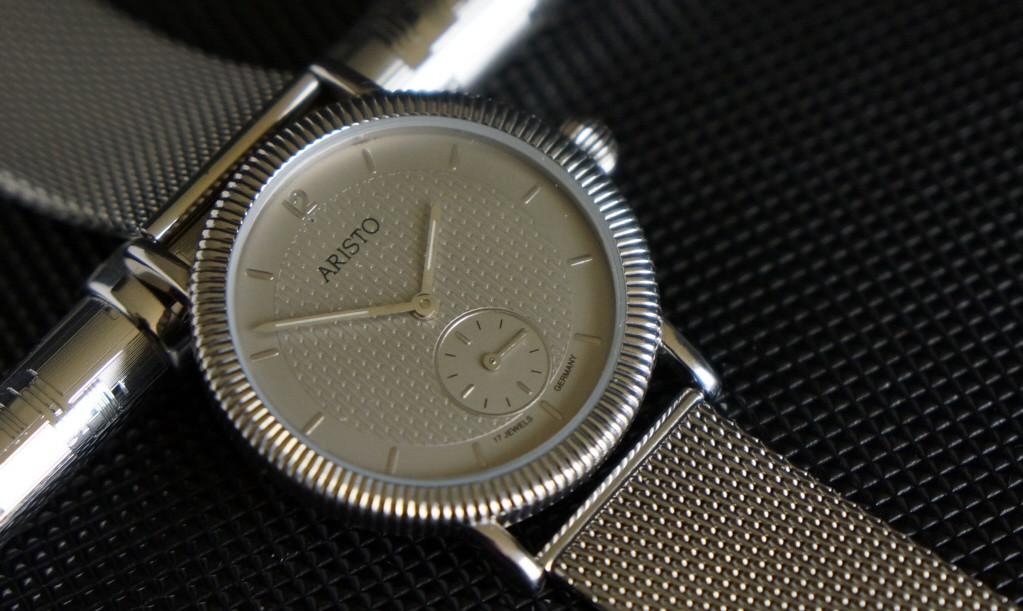
Aristo Sport Handwound 7001H8
ETA (Peseux) 7001 21.6 kbph 17j Manual (hand wind)


  • Ref# Aristo 7001H8; Bauhaus style graphic design
    Offered in several dial colors, PVD case coatings, and leather strap or Vollmer Milanese band;
    H8 has a metallic silver-gray dial and no PVD coating
  • Manufacturing year: 2003
  • Case diameter: 34mm (without crown)
  • Dial diameter: 28mm
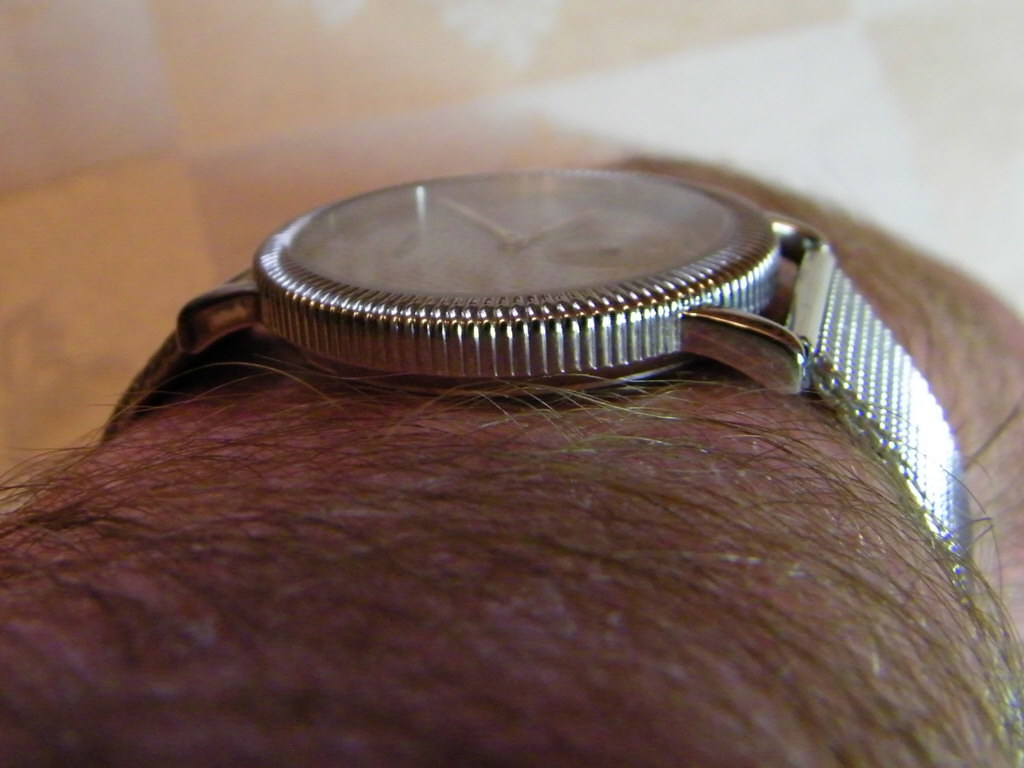
  • Case thickness: 6mm
  • Lug-to-lug length: 40mm
  • Lug width: 18mm
  • 316L stainless steel case, crown, back and Vollmer Milanese band
  • Crystal: Flat hardened mineral glass
  • Back: Snap down and solid (no display window)
  • Band: 1.5mm thick, 18mm wide Vollmer Milanese with standard hook and flip lock closure
  • Weight: 58 grams with the Vollmer band
  • Movement: ETA (Peseux) 7001 17j 21.6kbph mid-beat manual hand wind without hack
  • Etachron regulator and Incabloc shock protection
  • Crown: Push-pull onion shape with two positions for winding and time setting
  • Water resistance: 3 ATM (30 meters; rain and splash protection only; no shower, pool, hot tub or saturation diving)
  • Hands: Lumed bayonet hour and minute hands; stick seconds hand
  • Coarse basket weave textured central dial
  • Flat outer dial ring with Arabic 12 and stick indices for remaining hours
  • Seconds sub-dial inset just above the 6 with stick indices every 5 seconds
From the manufacturing year, this is obviously not a new watch and I've owned it for several years. It was found languishing as "new old stock" in the original box with tags a few years ago in the Internet store-front of a German watch dealer. I had been very patiently searching for a good watch with an ETA 7001 inside at an attractive price for several years. What I had been finding was either decidedly not my style or was priced higher than I wanted to spend. This Bauhaus style filled the bill exactly.

About Aristo:

Aristo is a German company in Pforzheim, one of several traditional German watchmaking regions. Founded in 1907, they're joined at the hip now with Vollmer, having merged under the same ownership and management. Vollmer, founded in 1922, is a maker of upmarket metal watch bands, also located in Pforzheim. The U.S. Vollmer distributor sells watches under that branding as well (very similar to Aristo in style). Some watchmaking has remained in the region, but it's not nearly what was there prior to WWII, or after the Japanese quartz onslaught. German mechanical movement and watchmaking didn't survive nearly as well as the Swiss did. There has been some growth in recent years, but it's been very slow. Aristo's main products for some years now have been aviation and aviation related watches, with some maritime, u-boat and marine watches. In addition, they currently offer several models in the style of vintage auto gauges, and some general military field watches. They're generally the contemporary standard to larger men's sizes (standard to large for watch brands other than Android or Invicta). The company owner also has a penchant for thin dress watches, creating his 7001 models in 2003. These didn't last more than a couple years in their collection, perhaps because dress watches of their size were so different from the Aristo norm. It was followed by a similar, slightly larger line and Aristo has quietly expanded their Classic and Bauhaus offerings paying homage to their 1920's-1930's Weimar Era, and their 1950's-1960's pre-quartz past.


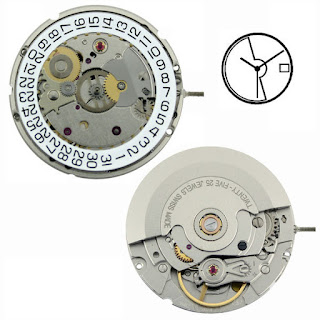
The ETA 7001 movement was designed by Peseux and put into production in 1971. Peseux was folded into ETA during the huge collapse and consolidation of Swiss movement and watch companies in the 1980's as the Japanese quartz Juggernaut nearly wiped them out. Their 7001 is one of the movements to survive the drastic reduction in watch movement calibers, no doubt due to its unique 2.5mm thinness in a mid-size 10.5''' (23.3mm) diameter. Compare that to the 3.6mm, 11.5''' (25.6mm) ETA 2892A2, or the even thicker 4.6mm ETA 2824-2. One can argue that at 2.5mm, it's the thinnest standard mechanical caliber in current production available to watch makers (assemblage brands buying ebauches and whole movements versus manufactures making in-house movements).

(Updated July 2020)
There are thinner mechanical watches and movements, but the movements are in-house and proprietary (i.e. not available to other watch companies). The current record holder I'm aware of (as of July 2020) is Piaget's manual wind Altiplano Ultimate Concept Watch at a mere 2mm thick. Price is only available on request by serious buyers. (Hint: If you have to ask, you can't afford it.) Their 3.65mm Altiplano Ultimate Manual Wind is $32,500. Bulgari keeps challenging them and time will tell if they can get beat Piaget's 2mm. The rest of us mortal proletarians will have to settle for 4mm thicker watches like this 6mm Aristo, which boasts a seconds hand Piaget (and others) jettison in creating their thinner movements. As thick as it is by comparison, I haven't met a shirt cuff yet this Aristo won't fit under!


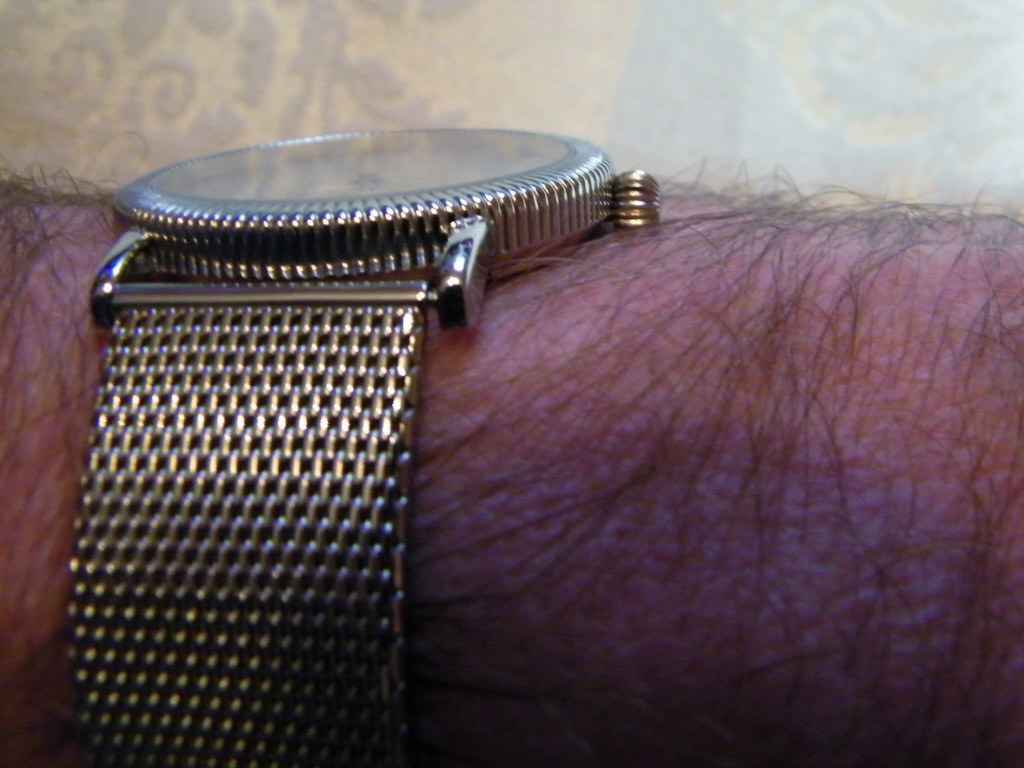
The 1.5mm thick Vollmer Milanese band is a good match-up for the thin watch head. It works well aesthetically with the shorter lugs, without the unduly large and unsightly gap watch heads with longer lugs create when straight end bands are put on them. The crown is also proportional to the watch head and its onion style shape provides a good grip for winding and time setting in spite of its smaller size. The coin edge bezel matches the crown knurling and Milanese band. It's a combination of function and harmonious aesthetic that shows thoughtfulness in the complete design.


In spite of their narrow width, Aristo put some lume down the center of the bayonet hour and minute hands. It's only about 1/3rd their width, but it shows up quite brightly. It's not a Seiko Monster beacon, but it does glow sufficiently for a while in dim lighting. One might wonder why no lume around the hour indices. A lume dot large enough to make it reasonably visible would clutter the dial. I've not had a problem discerning the hour and approximate minutes without hour index lume (the time above is approximately 1:50).


Most ultra-thin watches suffer from a two dimensional appearance, as if they were printed onto a strip of plastic, mylar or paper. It starts with plain flat enamel dials with ultra-narrow flat stick hands, and continues with smooth flat bezels surrounding them. The strap is typically very thin and flat with no texture. Their stark plainness is not very interesting visually. The Aristo has a textured, coarse basket weave dial, very slightly raised hour indices, along with a raised ring around the seconds sub-dial and around the inner dial separating the basket weave from the hour indices. The combination of dial textures, coin edge bezel and onion crown with the Milanese band give it visual interest and depth, in spite of its extreme thinness, and their subtlety maintains a simplicity of style.


There are formal and semi-formal occasions when the large sports or tool watch isn't an appropriate match for the attire. A smaller, thinner and less conspicuous dress watch is called for. It's why I have a few formal watches. This Aristo is one of them.

Note:
I have no affiliation, association or financial interest with Aristo, or its sister company Vollmer, or any of their distributors or dealers.

Swatch Group ETA Mechanical Movement Alternatives

Filling Swatch Group's ETA Mechanical Movement Void Sellita, Miyota, Soprod, and Ronda In 2002, Nicolas Hayek, then CEO of the Swatch Gr...