Tuesday, August 28, 2007

Review: Enicar 150 Year Jubilee Automatic

Enicar 150 Year Jubilee Automatic


Summary:
  • Commemorative edition celebrating Enicar's founding in 1854
  • 39 mm diameter
  • 11.5 mm thick
  • 22 mm wide tapering to 18mm by 3mm thick solid stainless steel band
  • 130 grams
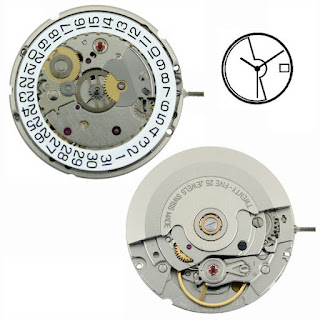
  • ETA 2836-2 25 jewel 28,800 bph auto movement
  • Solid stainless steel case, display back and crown
  • Screw-down crown signed with Enicar logo
  • Sapphire domed crystal; slightly thicker than most
  • Sapphire display crystal on back
  • Signed band and movement rotor
  • Bold and bright lume on dial numerals and hands
  • Minutes chapter ring with 1/4th minute tick marks
  • Unusual, horizontal day display above the date at the "6"
As you might guess, I've accumulated several unusual brands, Enicar among them. This is a Swiss Made brand originally founded in 1854 that faded from sight and reemerged . . . more than once from what I gather in the sketchy histories I've found.

The most touted history runs from 1914 into at least the 1970's with the founding of Manufacture d'Horlogerie Enicar S.A. by Ariste Racine at La Chaux-de-Fonds in 1914 (moved to Lengnau about 10 or so years later). This is the same Ariste also founded another brand bearing his Racine surname. "Enicar" is "Racine" spelled backward. In a marketing strategy similar to that of Rolex, the company provided chronometers to explorers and adventurers, including two failed North Pole attempts. Its claims to fame include the successful 1956 Swiss Everset expedition lead by Ernst Reiss and the 1957 Atlantic crossing of the Mayflower II with a chronometer affixed to the ship's rudder and immersed for 50 days. In 1958, legendary race driver Stirling Moss became one of their spokesmen. The Everest expedition spurred large sales of the rugged and "weather-proof" Sherpa model (including divers). These vintage Sherpas can be found frequently floating in The Bay (along with other vintage models).

The company seems to have disappeared some time in the 1970's. I don't know if its current incarnation survived the 1970's as a very small company with a miniscule market or if the branding has been resurrected under different ownership. In any event, the brand's quality has definitely not suffered one iota. The name under its current ownership is living up to its heritage.

This example is a 150 Year Jubilee model created in 2004 commemorating the original Enicar name established in 1854. It comes in a very large and impressively lavish box. A large mirror finish 38mm stainless steel case with equally high polish solid link integrated bracelet and concealed butterfly clasp encase a decorated 25j ETA 2836-2 movement with Enicar signed rotor. The case is 48mm long lug-to-lug and the integrated solid link stainless steel band is 22mm wide at the lugs tapering to 18mm at the clasp. The crystal is thicker than normal domed sapphire. This display back is flat sapphire and the screw-down crown is signed with the Enicar "Saturn" logo. Even with all the steel and sapphire, weight is held to a moderate 130 grams.

Fit and finish are superb. The blue dial has a dramatic sunburst texture with bold white arabic indices and hands. The "white" is all lume. At night it glows like a beacon. Of note is the encircled date at the "6" position with the weekday above it horizontally, which requires a custom weekday ring. Even though the movement allows for bi-lingual weekday setting, the weekday is in English only, and the 2nd language setting shows only the midpoint between two weekdays. The printed chapter ring is easily visible, clean and very precise, its small size keeping it from being too bold compared to the rest of the dial.

A testament to thoughtful details in its design is the 2/3 size links found next to each of the clasp end links (also signed with the Enicar logo), which removal or addition of when sizing the bracelet allow for micro-adjustment. This feature isn't very noticeable until adjusting it! While some might find the dial a bit bold, I've found it exceptionally legible at just a glance and extremely easy to read at night, including visiblity of the diamond lume at the tip of the second hand.

Shiny and dressy enough for wear with business suits or formal wear, its bolder dial also fits well with casual attire, making one of the few I've seen that's suitable for a very wide range of clothing styles, activities and occasions. Want something unusual with a touch of class, including brand, that's well made with high quality materials, durable, and affordable? Check out the current Enicar collection.

Summary:
  • Commemorative edition celebrating Enicar's founding
  • 39 mm diameter
  • 11.5 mm thick
  • 22 mm wide tapering to 18mm by 3mm thick solid stainless steel band
  • 130 grams
  • ETA 2836-2 25 jewel 28,800 bph auto movement
  • Solid stainless steel case, display back and crown
  • Screw-down crown signed with Enicar logo
  • Sapphire domed crystal; slightly thicker than most
  • Sapphire display crystal on back
  • Signed band and movement rotor
  • Bold and bright lume on dial numerals and hands
  • Seconds chapter ring with 1/5th second tick marks
  • Unusual, horizontal day display above the date at the "6"
MSRP could not be found; street price is under $500 although dealers can be somewhat difficult to find in North America or on the internet. It takes some searching to find them.

Enicar's Web Site
Note: I do not have any affiliation or association with Enicar, or any Enicar dealers, beyond having bought an Enicar from a dealer.

Review: Tissot Seastar 1000

Tissot Seastar 1000 Automatic


Tissot is a Swiss watch making company founded in 1853 by Charles-Félicien Tissot and his son, Charles-Emile Tissot, in Le Locle, a small town in the Swiss Jura. Like most watch companies in the mid-19th Century, they made pocket watches. By the end of WWI they were making wristwatches as the popularity of them rose during the war. Their first round of financial troubles resulted in a merger with Omega in 1930 that created SSIH. The merger was financial and governance in nature. Both brands retained their own unique identities and product lines afterward.

During the early 1980's, Tissot was among a number of companies pulled under the umbrella of The Swatch Group which was formed by the Swiss banking industry and government to save the Swiss watch making industry from financial collapse caused by the onslaught of inexpensive quartz watches made in Japan. They are financially independent of the other watchmaking companies and brands within the group, and must maintain their own viability. Their financial stability has gradually improved over the past 30 years. During the late 1980's, Tissot made watches from unusual materials including rock, mother of pearl, and wood. While they were more of a fad, it showed Tissot's imaginative thinking and willingness to take some risk to try unusual concepts. Within The Swatch Group, Tissot is classified as a "mid-range" brand along with numerous others including Balmain, Hamilton and Mido.

While Tissot started as a "Manufacture" (making their own movements), they have been an "Assemblage" for several decades, and the watch movements they use now, both mechanical and quartz, are made by ETA, a movement maker in The Swatch Group. ETA has a long and renowned history of designing and making high quality watch movements. Tissot has an international market presence with wider international brand recognition, including within North America, compared to a number of the other Swatch Group brands.

Although they make a range of styles, their primary focus in the past few years has been sports watches, many of which are associated with car and motorcycle racing. They are the official timekeeper for NASCAR, and Danica Patrick, a well-known Indy Racing Leauge (IRL) driver is one of their "ambassadors," which has improved brand visibility in the USA. Others in their collections like this Seastar are associated with diving.

The presentation box the Tissot Seastar 1000 comes in is more than impressive. It goes above and beyond most packaging materials and workmanship quality I've seen used for watches in its price class, with a special compartment in the bottom containing a good sized book about Tissot and their history.

At 44mm x 52mm x 16mm and 180g it's Gargantuan and massive, especially compared to nearly all my other watches. The only other one in my collection that rivals its size and weight is the IWI Marine Diver (not quite as tall, but heavier). The lug width and heavy band is 22mm wide. A "true" diver, it's rated to 300 meters (1ooo feet) with a very solid and heavily protected screw-down crown, and a thick bezel.

My wrist is modest and this one definitely covers it completely. I knew its dimensions when I bought it and there was some concern it would look much too big for it. However, Tissot did a marvelous job designing its lugs, bracelet attachment and scaling the Seastar 1000. The lugs slope downward more than on most watches and the bracelet falls off around the wrist naturally. Every element is scaled so that no elements look unnaturally larger than the rest, a very pleasant surprise as macro-photographic perspectives can only hint at this.

Workmanship, fit and finish are immaculate. The polished areas are mirror finish and the brushed areas match texture throughout. The sapphire crystal is noticeably domed . . . more so than the others I have . . . without a "cyclops" magnifier. It doesn't need one as the crystal is a slight magnifier and date is easily readable.

The silver dial has a magnificent ultra-fine sunburst texture with high polish silver applied indices that do not get "lost" as they stand boldly proud above the dial. Of special note is the chapter ring with half-minute marks; this is the only watch I've seen with 30-second intermediate and shorter hashs around the dial. Printing is clean and straight with very sharp edges. Hands are bold without being so bold as to cover too much of the dial and the red tip on the seconds hand is a nice touch that makes it easier to see.

Lume is bold, bright and even throughout, on the hands, just outside the indices, and on the bezel ring. The bezel ring has one-minute detents and is very smooth with positive detenting that feels solid without any wobble or rattle.

Some may not like a display back on a diver, but this doesn't bother me. It has a "porthole" look embedded into the back held on with screws. Slightly off-center, the SCUBA diver and Tissot logo show on the decorated auto-wind weight when it's oriented in the correct position. The movement is a 25 jewel high beat 28.8k bph ETA 2824-2 automatic with date complication. As this ubiquitous movement is so well known, I won't say more about it here.

The solid machined links on the bracelet are thick and heavy to counter-balance the weight and scale of the watch head. Signed clasp closure is very positive without being hard to work and conceals a dive extension with equally positive closure. Removeable links have "split pins" and these were much harder to remove than with others I've resized. While this may be one downside and make resizing the bracelet difficult, it also indicates the pins will not work themselves out over time.

The signed crown screws down smoothly and the detents for date quick-set and setting time are positive. Knurling on the crown and bezel should make them easier to operate with light gloves on than with most watches. The crown guard fits the style of the rest of the case nicely and is a very desirable feature to protect the large crown without making it difficult to unscrew and use to set the watch.

Once I had the bracelet adjusted properly, the watch feels very comfortable and balanced on the wrist even though its high mass can't go unnoticed. The secret is removing the proper number of links from each side to keep the hidden z-fold of the clasp centered under the wrist when the watch head is centered over the wrist.

Overall Impression:
This is a phenomenal watch for its price point. I don't consider it a true "tool" watch although it could certainly be used as one. It's simply too beautiful to subject it to what diving would undoubtedly do to its case and bracelet finish! This is a watch that wants to stay beautiful! Those bothered by very large and heavy watches on their wrist should find a different watch; this one isn't for them. However, for those that do wear larger and heavier watches, don't dismiss the Tissot Seastar 1000 based on its much larger than normal dimensions and weight compared to other divers. You would be pleasantly surprised that it doesn't look or wear oversized. Tissot ordered up a "diver," told their designers to make it Biggie Size, and that's just what they did; very, very well!

It fits my modest wrist just fine!Tissot's Web Site
Note: I do not have any association with The Swatch Group, Tissot or their dealers other than having bought a Tissot from an authorized dealer.

Monday, August 27, 2007

Part 3: Lowe's Tool Case Wristwatch Conversion


The next problem was how to make the slots in the horizontal and vertical dividers so they could be latticed into a grid. A slot half-way up from the bottom on one and half-way down from the top on another where it intersects will allow them to form a lattice. The Plexiglas is 1/8th inch thick, therefore the slots should be just slightly wider than that (so they don't bind during assembly).

Also needed to decide which should have the upper slots and which should have the lower ones. Sounds trivial, but it can affect structural strength. The two overwhelmingly common orientations for the tool case are resting on its bottom or resting on its back (when closed). When resting on its bottom, little if any force would be exerted on the dividers. Not so when resting on its back. The weight of the watch in each pocket is resting on a horizontal divider. Since the watches will be at the tops of the pockets, their weight will be more on the top half of the horizontal dividers. Very little force from the weight of the watches will ever be exerted on the vertical dividers in normal use. Therefore, the strongest latticing would have the slots in the upper half on the vertical dividers and on the bottom half of the horizontal dividers. Forces tending to flex the upper portion of a horizontal divider at the back of a pocket will push it against the slots on the two vertical ones on each side attempting to compress them against the back of the case, and the dividers are much less likely to break, especially if the case is dropped several inches from its handle during transport.

Plexiglas, like most rigid plastics and other brittle materials can crack at sharp corners, the crack migrating from the corner outward. This is why the corners are almost always radiused slightly as it tends to inhibit cracking. The slots are only going to be just over 1/8th inch wide, but they'll be just over 1-3/8 inches long. Easy to cut each side of the slot, but not so easy to cut across it at the end, and the corners there should be radius. The solution? Kill two birds with one stone. Drill a hole 5/32 inch in diameter, just a tad wider than the slot needs to be, centered on where the slot needs to end. This provides a radius around the entire end, and eliminates the need to cut across the end. After the holes are drilled, straight cuts using the band saw down each side of the slot to the hole will create the slots needed. Significant time was spent scribing the Plexiglas for the hole centers, and the slot sides before doing any drilling or cutting. Making the hole and the slots just a hair wider than the need to be allows for a little slop in drilling and cutting, and ensure no stress is placed on the sides of a slot when assembled, something that can also precipitate a crack forming eventually at the end of the slot. Whatever slop or looseness there is will be hidden and tightened up by complete assembly along with the padding and upholstering; provided it isn't too sloppy.

Now for the drilling and on to the drill press. If you have a variable speed drill press, its RPM should always be set up for the drill diameter and the material being drilled. Here's the table under the sheave and belt cover on mine. Had to move the belt to another set of sheaves - it was set at a much too low RPM for a small drill diameter and plastics. Extremely important for safety! Ensure a machine with a huge motor on it is UNPLUGGED before doing things like this. The belt in a sheave can take the end of a finger off in the blink of an eye, and not even slow down.

Next was setting the depth of the drill. Notice the wood table on the drill press. Actually, it's 3/4 inch thick and there's a cast iron table under that. Reason for the wood? If the table is accidentally drilled into, the wood can be replaced much more easily for much fewer $$$ than a cast iron one. Even so, drill presses have a stop to prevent that (if it's used properly). A piece of scrap 1x6 will serve as the "backstop" underneath the Plexiglas strips and the drill depth is set to no more than half its thickness.

Now we can start drilling the holes and the score lines can be seen.
There were many holes to drill, but it was finally finished.
Back to the band saw to start cutting the sides of the slots. First slot was done, a lot more to go! The jury rigged fence used to cut all the strips of Plexiglas the same width is now gone. Additional care is needed now to not break any of them.

Just to make certain everything is working as planned, I cut the smaller right side dividers first, and assembled them on the band saw table. Yep, they fit together just as planned.

But would they fit inside the case as planned? Another Happy Day!
And how does my biggest watch look? Is there enough space around it, or were the dimensions botched? Looks like there's just enough; didn't want the watches rattling around either. Looks like I got it right. On to cuttting all the remaining slots in the rest of the dividers.

Finally done! Here is the lattice of dividers, assembled now inside the case, along with my largest watch (Tissot Seastar 1000) in one of the pockets. Doesn't have to look pretty, just has to fit together and be strong enough. The padding and upholstering with Ultra-Suede will cover it completely.
And a close-up of the spacing around the Tissot. Looks like just enough space around all four sides for the padding and upholstering, and the watch will be slightly snug into the padding to keep it from rattling around during transport.
The next task was cutting foam padding and gluing it onto the dividers.

Part 2: Lowe's Tool Case Wristwatch Conversion

Cutting the Dividers

Link to Part 1: Introduction

The Lowe's tool case came with two long dividers, about 12-1/4 inch long, that can divide the case interior completely from front to back. Unfortunately, they only provide two of them, and getting more isn't possible (unless one buys more cases). I'm going to need more dividers of the same size. The question became the material to use. I had more than 18 watches when I bought the case and have even more now. It would be nice if it could hold more. Should be able to get 7 across with padded dividers more closely spaced and might be able to fit 4 rows of them for a total of 28. Even if only three rows will work, 21 is still a few more than 18.

The next question was the materials from which to make my own dividers. I just happened to have some Plexiglas sheets laying in Ye Olde Junque Box, left over from my Dad's when I cleaned out his house after he passed on. He taught me well: Don't throw things away, especially raw materials and hardware, that might be useful in some future, unforseen project; reduces trips to hardware stores and keeps money in one's pocket.
It also just so happened that their length and thickness was exactly that of the long dividers (sans padding) that came with the tool case. These could be used to create some of my own additional dividers. I also had some suitable foam padding material and a can of adhesive that will adhere the foam to the Plexiglas without damaging either. Dug out the small square, a steel rule and a scribe from the tool bench. Measured an original divider, laid out the shape of it on a sheet of Plexiglas.After marking the Plexiglas with the scribe, I put it on top of the original divider to see how well it matched up visually. No problem. The bottom corners will have to be notched to fit the radiused edges and corners inside the tool case, like the dividers it came with. I'll be darned. The same coffee mug got into this photo as in the one shot a year ago when the case was new!

Now to cut the sheets into strips the correct width. The inner material used in the originals is some form of Plexiglas, Polycarbonate, ABS or similar material that flexes slightly. This inner, stiff core is exactly 2-3/4" wide. What to cut the Plexiglas with was the next problem. They need to cut very straight. I could use the 10" table saw and its rip fence, but don't have the appropriate extremely fine toothed blade to cut sheets of plastic . . . nor do I want to buy one (carbide tooth blades are $$$).
However, it can be done with a band saw with a 15tpi blade. Alas, nearly all band saws do not have a rip fence. They're usually used for scroll work on thicker materials. An expedient fence using a piece of scrap 1x4 of Douglass Fir (left over from a completely different project; another reason to keep certain scraps around), a couple of deep C-clamps, and a small combination square can set up a fence on the band saw's table quickly. Don't forget there's a kerf width to account for in measuring where to set the rip fence! Plastics can also chip and crack when being cut using a power saw, even with extremely fine-toothed blades. A bit of thin masking tape covering where the cuts will be made helps prevent that.

If the band saw looks vintage, it is. It was my Dad's and when he bought it, the thing was already very vintage. It was made circa 1933-1936! Requires a separate motor (they didn't come with one integrated into the saw then). The wheels are cast iron, and balanced (small drill holes in the edge around the rims). Takes a second or so to spin up, even with a 1/3-horse motor, but they're Mondo flywheels -- takes a LOT to slow them down once they're up to speed with all that rotational momentum spinning around. Saw doesn't bog easily!
Bed is very heavy cast iron, ground dead flat and has remained that way since it was made nearly 75 years ago. Wouldn't trade it for a brand new Delta! They don't make 'em like they did this one any more.
Two sheets were ripped and the bottom corners were notched in short order. Got three dividers per sheet for a total of six cores for home-brewed ones, in addition to the two the tool case came with.
Although I had double-checked beforehand - measure twice and cut once - off came all the tape and they were checked against an original. Perfect match dimensionally (by eyeball comparison; close enough for me). Now to see how they actually fit, and whether or not I can get seven across. Pulled out my TISSOT Seastar 1000, my largest watch (at the time), and started spacing them . . . Happy Day! I can fit seven across with enough additional space for the padding that will have to be put on the dividers . . . and the new dividers are just the right thickness and length to fit perfectly into the shallow slots around the sides of the tool case.

Now for the cross dividers. This entailed measuring more dimensions, and then designing exactly how to fit everything together into a grid.
Sometimes something is discovered during a project and a better idea comes along resulting in changes to the original plan. That's what happened as I got started making the dividers to go across the the tool case. It's about 18 inches wide, so the design question was where to put one of the long dividers the case came with, and how long to make the cross-dividers for each side of it.Started working out the details of the spacing for the cross-dividers. The Bad News: Four rows will not fit, only three. This means it will end up holding 21 watches, not the 28 I had hoped to achieve. The Good News: I discovered by complete serendipity that the second long divider fit perfectly as a cross-divider if the first long divider was placed where one of dividers made yesterday would go.

Hmmmm . . . needed to think about this. Good spacing of the three rows (for the pillows in my watch boxes) didn't consume the entire case either. There was a bit of space left over. It could be consumed by additional padding, or it could be worked into some small cubbyholes for accessory storage. A design revision ensued.

I cut more long dividers from additional panels of Plexiglas on the band saw. The first four would also have to be shortened, and short cross-dividers would have to be made, 5" long, to go on the right side of the case. I could cross-cut using the band saw, but that's painful trying to make a straight line. There is no miter slot on the bed, unlike a table saw.
I could also jury rig a cross-cut miter guage that would slide along the edge of the bed (using an old wood drafting T-Square; I have several from which one could be sacrificed and retained for future use). Nope, more than I wanted to do for this, and didn't want to dismantle the jury rigged rip fence just yet. More strips might have to be made (if cross-cutting existing ones were botched). Aha, the miter saw still had the abrasive non-ferrous material cut-off "blade" in it! Strips were cross-cut using it very carefully to ensure proper dimensions, and very slowly to keep from melting the Plexiglas (which I discovered it would do quite quickly with the first cut).Now to see if everything fits. Yep! There was also a trip to the local fabric store to look for suitable material to cover the padding that would be laminated onto the Plexiglas. Told the Better Half where I was going. She immediately felt my forehead to see if there was signs of fever. Then she presented me with a list of stuff she wanted! Also suggested I look for Ultra-Suede after looking at my watch boxes to see what they're lined with. Got to the fabric store and I was the only male there the entire time. Ultra-Suede it is; texture and feel is just like the material lining my watch boxes. Got a yard of it for about $10 (the bolt is 54" wide). It was on sale at half price! Should be enough to cover everything. Also remembered the "other stuff" the wife wanted. The last photo in this part shows all dividers in their planned locations, and some of the coffee colored Ultra-Suede can be seen in the lower left.
Next step was making a lattice out of all the Plexiglas dividers, the subject of the next part.

Link to Part 3: Creating the Grid

Sunday, August 26, 2007

Review: IWI Marine Diver Unitas

IWI Marine Diver Unitas


Summary:
  • 44 mm diameter
  • 52 mm length lug-to-lug
  • 13 mm thick
  • 24mm wide X 4 mm thick solid screw link stainless steel band
  • 250 grams
  • ETA (Unitas) 6497-1 21 jewel 18,000 bph movement
  • Sandwich lume, high gloss deep black dial
  • Stainless steel case, crown and back
  • Heavy screw pin band attachment
  • Sapphire slightly domed crystal with underside AR coating
  • Sapphire display back
  • Lock down crown and butterfly clasp with pushbuttons
  • Seconds sub-dial
International Watchman, Inc. is a small company located in a suburb of Cleveland, Ohio. Like a number of very small watch companies in the U.S., they are technically a "Private Label" firm. The watches are custom made for them with IWI's name and logos by an "Assemblage" in Switzerland.

IWI has quite a range of mechanical watches. While a few "dress" models are offered, most of them are Diver, Pilot or Quasi-Military styles, including a line of GMT variants. They offer many more models and variants than most other watch companies of similar size, including a good number of Women's watches. IWI uses excellent materials, including Swiss Made ETA movements in all their watches. Their entire offering appears to be mechanical; browsed through their catalog and could not find any battery powered quartz models (including in the Womens' models and in their "Dress Watch" line). This one is the "Marine Diver Unitas" with silver hands and it's on an optional (at extra cost) stainless steel band. It comes with a see-through "display back" that allows viewing the mechanical movement inside.

Although it's not the largest watch they make, the Marine Diver Unitas is still quite BIG! It's the first thing noticed when opening the box. A 44mm case diameter on a cushion style case with a comparatively thin bezel and very large crown guard that protrudes 6mm from the side of the case to completely surround the crown makes for a watch that looks even larger than its dimensions. Other case dimensions: 52mm from lug tip to lug tip, 13mm height, and 24mm band width between the lugs. Case, crown and bezel are made of solid 316L stainless steel. Both crystals (top and back) are sapphire, and the top crystal is very slightly domed with an AR coating on its inside to reduce reflections. A watch head this size made of these materials will be quite heavy; it's over 250 grams. Dial is an extremely high gloss, deep "India Ink" black color. The dial is actually a "sandwich" with its very bold hour indices in arabics and batons cut out in the upper dial much like a stencil. The lower dial under it is coated with luminescent paint (either Luminova or Super-Luminova). This design gives the dial a unique 3-D appearance different from most other watches. The hands are highly polished silver color batons with a wide center stripe of Super-Luminova (variant models have gold hands or blued steel hands).

The overall concept for the Marine Diver Unitas is derived from the large wristwatches used by the Italian Navy (Marina Militare), notably by their special manned torpedo commandos of the 1a Flottiglia Mezzi d'Assalto formed just prior to WWII in 1938. Two years later in 1940, at about the time Italy joined WWII, its designation was changed to Decima Flottiglia MAS. The Italian navy was the first to use "frogmen" and human guided torpedoes. These SLC (Silura a Lenta Corsa; Slow Running Torpedo) commandos would be transported to their target area by submarine. Once released from the sub, each torpedo (called chariots by the British) with a crew of two would ride it to their target, detach its limpet mine warhead, and attach it with a timer on the targeted ship. The crew would then use the torpedo to ride back to the submarine.

Although their daring was high, their success rate was low with a very high casualty rate. Even so, for the small size of Xa-MAS during the war, they managed to sink over 200,000 tons of Allied warships and merchant ships from 1940 through 1943 prior to Italy's armistice with the Allies. Although some of the commandos stayed with the German military until Germany's surrender in 1945, SLC manned torpedo operations ceased in 1943 with the armistice. Italian commando units were formally disbanded and banned at the end of WWII, but the Xa-MAS was resurrected when Italy joined NATO in 1954. A number of nations, including Italy, continue to make and keep manned torpedo commandos, and train commando crews for them.

I opted to have my Marine Diver Unitas delivered on the optional 24mm wide, very thick, solid 316L stainless steel band with machined links. Each link is actually two pieces held together with a pair of flush machine screws on the underside; one part has a high polish mirror finish and the other a brush finish. The band is attached to the watch head using heavy screw pins, and removable links have screw pins and center tubes. Don't drop and lose any tubes when resizing the band; they fall out of the link centers easily when the screw is pulled! Clasp is a hidden butterfly deployant with positive closure and tabs on each side that must be pressed inward to open it. The steel band also comes with a pair of "half links" about 2/3rd the size of a normal link. This allows resizing in 1/3rd link increments by using one, both or neither of them. It also came with a "stock" leather strap (minor upgrade to crocodile) and I had a butterfly deployant (also an option) placed on the strap for delivery. Put the leather strap on the watch head briefly to size it, and it installed easily. While the strap is impressive and quite well made, as is the very solid deployant, I prefer steel bands over leather on my watches. Even so, I may swap between the two occasionally in the future. In spite of its size, it wears well on my smaller size wrist very comfortably, even with the very large crown guard. The trick to wearing a hidden butterfly clasp without it digging into the wrist is proper band sizing, and adjusting its exact location. I tweaked this for a half day using the 2/3 links to micro-adjust its size, and by moving a link from one side of the band to the other.

The large case size is needed to house a 17 jewel 18,000 bph ETA 6497-1 hand-wind with an impressive 56 hour power reserve from full wind. Doesn't seem like much except the movement was originally created by Unitas in 1950 for pocket watches, hence the "Unitas" in the watch name. Mens' pocket watch movements are not small. The ETA 6497-1 is 16.5"' (Ligne, 1/8th of the old French inch), a very old measure of movement diameters still in use. That's 36.6 mm in diameter; it's also 4.5mm tall not counting a dial and hands. Add a few millimeters all the way around around its diameter for a steel case to house it and whatever watch is going to use one is easily over 40mm diameter. ETA gained rights to Unitas' movements when they absorbed Unitas (and several other movement makers) during the latter part of the 1970's when The Swatch Group was formed to save the Swiss watchmaking industry financially. ETA kept Unitas' movement caliber number and it's still often referred to as the Unitas 6497 even though it's made now by ETA due to widespread recognition of it's original "brand identity." That a movement designed in 1950 is still in production nearly 60 years later without any significant redesign is a testament to its exceptional performance, durability and reliability.

Execution, fit and finish is excellent. The case is highly polished, the crystal is extremely clear (due to its AR coating), and the crown lock is firm and very positive in closure without binding. Dial and hands are impeccable in finish; difficult to achieve with a deep black high gloss dial finish. Out of the box it's running slightly fast, about 5 seconds per day, common for a new movement until its pivots wear in, which takes a few months of daily use. The huge, solid wood box the watch came delivered in is the largest and heaviest I've encountered. It's equally well finished with size and weight in keeping with the watch it contained. All are befitting a wristwatch in its price class and I've been quite impressed with it. The IWI Marine Diver Unitas is not a "true" dive watch as its water resistance is rated to 50 meters, nor is it intended to be. It's a "desk diver" with its concept derived from the watches used by the Italian Navy decades ago. A real dive watch is rated for 200 meters or more water resistance, and if used for diving, or even swimming, should be depth tested annually.

International Watchman does not publish a price list on their web site beyond pricing for bands and other accessories, and they do not have a published MSRP. Their business is geared for wholesale sales to department stores, and brick & mortar jewelry stores which set their own pricing. Depending on options (steel band, exotic leather band upgrade, etc.), and specific variant, retail prices among dealers for the Marine Diver Unitas are usually well under $1000.
Summary:
  • 44 mm diameter
  • 52 mm length lug-to-lug
  • 13 mm thick
  • 24mm wide X 4 mm thick solid screw link stainless steel band
  • 250 grams
  • ETA (Unitas) 6497-1 21 jewel 18,000 bph movement
  • Sandwich lume, high gloss deep black dial
  • Stainless steel case, crown and back
  • Heavy screw pin band attachment
  • Sapphire slightly domed crystal with underside AR coating
  • Sapphire display back
  • Lock down crown and butterfly clasp with pushbuttons
  • Seconds sub-dial
International Watchman Inc. Web Site
Note: I do not have any association with International Watchman other than having bought one of their watches and several accessories for it (delivered with the watch).

Review: Xezo Air Commando GMT Automatic

Xezo Air Commando GMT Automatic
Summary:
  • Limited edition of 500
  • 43 mm diameter
  • 54 mm length lug-to-lug
  • 12 mm thick
  • 22 mm wide X 3.5mm thick solid screw link stainless steel band
  • 180 grams
  • ETA 2893-2 21 jewel 28,800 bph auto GMT movement
  • Stainless steel case, crowns, bezel and back
  • Sapphire crystal with date cyclops and underside AR coating
  • Sapphire display back
  • Signed screwdown crowns and band clasp
  • 200m water resistance depth rating
  • 60 minute rotating bezel
  • 12 hour internal rotating ring
  • 24-hour GMT chapter ring
About Xezo (updated in 2020):
Xezo is a small micro-brand company in Texas that makes and sells men’s accessories: pens, sunglasses and watches. Their designs are inspired primarily by architecture and history. Many watches in the past were designed by Xezo and built to specification by a private label watch company in Lengnau, Switzerland. They have the “Swiss Made” label on the dial. Currently, with Swatch Group's reduction in ETA movement sales to companies outside Swatch Group (especially non-Swiss firms), Xezo is using the Japanese Miyota 9015 high-beat movement in their mechanical watches. Their quartz offerings typically have Swiss made Ronda movements. This one has a Swiss made ETA 2893-2 and was made while Xezo could still source movements from Swatch Group's ETA. Xezo makes all its watches (and its sunglasses and pens) in limited edition production runs, typically 500. While a case design may be reused, the dial and possibly the movement and its features will be different. Not that well known in watch collector circles, Xezo sells directly online through its web site, and puts some of their products on eBay (under Xezo), Amazon (also under Xezo), and Overstock.

The Air Commando GMT is a mechanical auto-wind. It's a numbered, limited edition of 500; the example depicted is #30. It's called a GMT because it has an additional complication (watch jargon for a time-keeping feature or function) that adds a fourth, 24-hour hand to the dial that rotates at half the rate of the normal hour hand. On this watch, the extra hand is colored red to distinguish it from the others. In addition to the large 12-hour arabic numeral indices for the normal hour hand, there are smaller 24-hour arabic indices for use with the fourth hand. This extra hand can be set separately, in one-hour increments, from the time displayed by the seconds, minute and (normal) hour hand. It allows setting the watch to a second time zone. Many set it to GMT (aka UTC), hence the watch's "GMT" classification, although it can be set to any time zone desired. In addition to the 24-hour GMT complication, there are additional features designed into the watch to provide a traditional, early 20th Century aviation timing function. Before modern avionics and sophisticated navigation electronics were put into cockpits, pilots would plan long flights with "legs" and the time to be flown along each azimuth, or leg of the entire flight. The normal crown at the "3" is used to set time and the GMT hand. The second crown at the "10" turns a secondary 12-hour chapter ring inside the watch. These are designed to be used for timing up to 12 hours in hours and minutes. Align the zero index on the bezel with the minute hand by turning the bezel, and align the secondary 12-hour chapter ring "12" with the hour hand using the secondary crown, and lock it down. Elapsed time can now be read using the secondary chapter ring and bezel. The rotating chapter ring controlled by the second crown can also be set for a third time zone (read using the normal hour hand), giving it a secondary function. Materials are first class. The case, crown and bezel are solid 316L stainless steel. The band is also of 316L stainless steel with solid, machined links (removable links have screw pins). Crystal is thick sapphire (aka corundum) and has an AR coating on its inside to reduce its reflectivity. The dial is silver with a deep engine turned guilloche sunburst pattern. Clasp is common "Z-fold" in style, heavy duty, with two side buttons to open it, and a flip-lock on top of it. Both crowns, the movement rotor and the band clasp are all "signed." Movement inside is the venerable 21 jewel, 28,800 bph ETA caliber 2893-2 GMT with Incabloc shock protection. Based on the 2892-2 with the GMT complication added to it, it's a movement usually found only in high end watches costing much, much more than the Xezo. The water resistance is rated at 200 meters (660 feet) depth, and is aided by both crowns being "screw-down." Out of the box new it's running about 10 seconds fast daily which is normal for a brand new mechanical movement. Should settle down in the equivalent of a few months of daily use as the pivots wear into their jeweled bearings, much like the "break-in" period for new automobile engines. The Air Commando is a BIG watch: 43mm diameter (not including crown), 54mm from lug tip to lug tip, 12mm tall and a 22mm wide band. It can be worn on a smaller wrist quite comfortably, albeit it fills the wrist, and dimensions of case, crown, bezel and band are proportionate looking. Its size, solid steel materials and thick crystal make it a heavyweight as well, tipping the scales at 180 grams. There's no mistaking that it's on one's wrist when wearing it. In spite of its weight, the edges of the band and case have very slight beveling or radiusing, and it doesn't dig into the skin, nor does the solid link band grab and pull hairs on the arm (unlike wrapped and folded sheet metal bands). Overall execution of its design, fit and finish are quite excellent. I'm surprised the Xezo Air Commando, also available with a black dial, hasn't seen greater popularity. As a numbered, limited edition, it's priced much lower than its contemporaries from the better known brands with the same movement and similar materials and quality!
Summary:
  • Limited edition of 500
  • 43 mm diameter
  • 54 mm length lug-to-lug
  • 12 mm thick
  • 22 mm wide X 3.5mm thick solid screw link stainless steel band
  • 180 grams
  • ETA 2893-2 21 jewel 28,800 bph auto GMT movement
  • Stainless steel case, crowns, bezel and back
  • Sapphire crystal with date cyclops and underside AR coating
  • Sapphire display back
  • Signed screwdown crowns and band clasp
  • 200m water resistance depth rating
  • 60 minute rotating bezel
  • 12 hour internal rotating ring
  • 24-hour GMT chapter ring
MSRP is currently $700 for either the black or silver dial versions. Look for "special offer" discounts that come and go on both.
Note: I have no affiliation with Xezo beyond being a customer that bought a watch from them.

Part 1: Lowe's Tool Case Wristwatch Conversion

Introduction

Lowe's home improvement store sells a sturdy tool case with a perforated foam insert that can be easily cut to the outline of tools or instruments to hold and pad them. It's quite inexpensive, especially compared to comparable brand name cases made by major tool and instrument case makers. It also comes with a handful of thinly padded dividers that can be used to create major compartments, and there are slots for them along the outer edge inside the case, and along the sides of each divider. The lid is has a solid piece of egg crate foam to keep tools or instruments from rattling around. Under it is a stiff hardboard with pockets for hand tools, much like pockets found in the top part of brief cases. Might be useful for some, but it's a pain to access as the egg crate foam must be pulled out to get to it. These cases have been popular among the "underground" of wristwatch collectors to hold between a dozen and two dozen watches for transporting wristwatches to gatherings of watch collectors. I've had one of these cases for over a year now. The outer case shell is well made and very sturdy.


The usual manner of setting up the inside is by carving out small blocks of foam in a grid to make pockets into which watches can be placed, and using the blocks that were cut out as "pillows" around which to wrap the watch. Sometimes the two longest dividers included with the case will be used to provide some stability to the large grid of pockets. I drew a grid in Excel to plan the pockets for mine when I first got it. Three rows of six pockets that could hold eighteen watches. Notice the extra space between the second and third columns, and between the fourth and fifth columns. The long dividers were used between these colums to add structural strength and stability to the foam grid. Looked for, but didn't find a photo of mine as it was originally set up. The photo on the right shows one that's used by a watch forum acquaintance of mine, Colby. He managed to get twenty-one watches in compared to my eighteen by using a slightly different grid configuration and omitting the two long dividers. Otherwise, the setup, filled with watches looked nearly identical to his.

The perforated foam it comes with works well except for two problems. When loading up the case with watches for travel, they must be transferred from the pillows they're normally stored on in dresser top watch boxes onto the makeshift pillows in the Lowe's case. With continued use, wear and tear on both the foam "pillows" and the foam grid eventually starts to break the foam apart (along its perforations). I've wanted to make my own padded dividers spaced in a manner similar to dresser top watch boxes that would allow using the pillows on which my watches are normally stored in them. Hopefully it would allow more watches in the case, either twenty-one or twenty-four. At the least it would make loading up the case faster and solve the foam durability problem. This is the saga of my Lowe's Tool Case conversion for transporting watches.

Swatch Group ETA Mechanical Movement Alternatives

Filling Swatch Group's ETA Mechanical Movement Void Sellita, Miyota, Soprod, and Ronda In 2002, Nicolas Hayek, then CEO of the Swatch Gr...